Bi-Weekly vs. Monthly House Cleaning (Basements Too)
Wondering if you should schedule house cleaning bi-weekly or monthly? Learn how to mix main-area and basement-only cleaning for a schedule that fits your home.
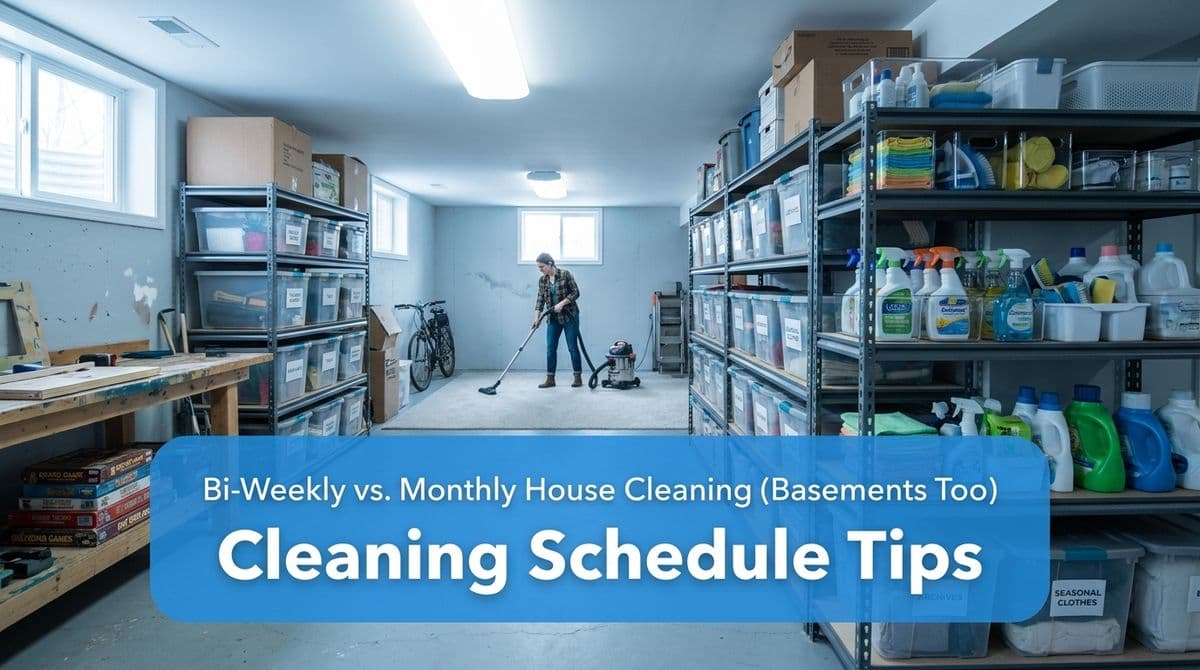
How Often Should You Schedule House Cleaning?
We recently got a call from a homeowner — let’s call her Laura — who had a great question we hear all the time: “How often should I have my house cleaned? Every other week? Once a month? And can you just do my basement monthly?”
Laura lives in a 3,000 sq. ft. home with multiple bathrooms and a finished basement. She keeps things pretty tidy herself, even using a robot mop and doing her bedrooms weekly, but she was tired of unreliable cleaners and wanted a regular schedule she could count on. Her ideal setup? Bi-weekly cleaning for the main house, plus a once-a-month basement cleaning.
That call was the perfect example of how we help homeowners choose the right cleaning frequency for their lifestyle, budget, and home layout. Let’s walk through how we think about bi-weekly, monthly, and basement-only cleaning so you can decide what works best for you.
Bi-Weekly Cleaning: Our Most Popular Schedule
In Laura’s case, we recommended a bi-weekly (every other week) maintenance clean for the main living areas. Her home was already in good shape — she rated it a “2” on a scale where 1 is the cleanest and 10 is the dirtiest — so she didn’t need a deep clean, just consistent upkeep.
On a bi-weekly schedule, we typically send a team of two cleaners for a home around 3,000 sq. ft. That helps us work efficiently and finish in a reasonable window without rushing. You also get the benefit of seeing the same team regularly, which builds trust and ensures they learn the quirks of your home.
Who bi-weekly cleaning is best for
- Busy households that use their kitchen and main living areas every day
- Families with kids or pets who track in dirt and crumbs
- Homeowners who like their space to feel “company ready” most of the time
- People who do light daily tidying but don’t want to tackle full cleans
Bi-weekly service creates a nice rhythm: dust, crumbs, and soap scum never get a chance to build up into bigger problems. You handle small things in between visits, and we reset the house every other week.
Monthly Cleaning: A Good Fit for Low-Traffic Homes
Laura also asked if we could clean her basement once a month instead of every visit. Absolutely. That’s a smart way to customize a plan based on how often you actually use each space.
In general, a monthly cleaning works well for:
- Guest rooms that aren’t used regularly
- Storage areas or offices with minimal daily traffic
- Basements or bonus rooms used only on weekends or for hobbies
With a monthly rotation, dust and cobwebs don’t get completely out of control, but you’re not paying for extra visits you don’t really need.
Common bi-weekly vs. monthly trade-offs
Here’s how we usually break it down for homeowners:
- Bi-weekly pros: Home stays consistently fresh, less buildup, easier maintenance, especially in kitchens and bathrooms.
- Bi-weekly cons: Higher overall monthly cost than a once-a-month schedule.
- Monthly pros: Lower cost, still keeps dust and grime from becoming overwhelming.
- Monthly cons: You’ll notice more buildup between visits and may need to do more touch-up cleaning yourself.
Many of our clients land where Laura did: bi-weekly for high-use areas, monthly for lower-use spaces like basements or guest rooms.
Basement-Only Cleaning: Why Once a Month Often Makes Sense
Basements are unique. They tend to collect dust, cobwebs, and storage clutter more than everyday messes like crumbs and spills. That’s why a lot of homeowners ask us to put them on a monthly basement-only schedule.
On a typical basement visit, we focus on:
- Dusting surfaces, railings, and window sills
- Vacuuming or mopping floors (including stairs)
- Removing cobwebs from corners and ceilings
- Wiping reachable surfaces on shelves or furniture
If you use your basement as a playroom, home gym, or TV room, you might choose to include it in your bi-weekly cleaning instead. Otherwise, monthly is usually enough to keep it from becoming a dusty, forgotten space.
What a Standard Maintenance Clean Includes
Because Laura’s home was already in good condition, we recommended a standard (maintenance) clean rather than a deep clean. That’s typical when:
- Your home has been professionally cleaned within the last 4–8 weeks
- You do regular light cleaning yourself (vacuuming, picking up, basic bathroom wiping)
Our standard maintenance clean usually covers:
- Bathrooms: Sinks, counters, toilets, tubs/showers, mirrors, floor cleaning
- Kitchen: Countertops, exterior of appliances, stovetop, sink, cabinet fronts as needed, floors
- Living areas & bedrooms: Dusting, wiping reachable surfaces, making beds (on request), vacuuming/mopping floors
- Entryways & hallways: Floors, light dusting, quick tidy
Deep cleaning, by contrast, digs into things like baseboards, inside appliances, and more detailed scrubbing — usually done once or twice a year, then followed by regular maintenance visits.
How We Estimate Pricing for Different Schedules
On the call, Laura wanted a ballpark idea of pricing before committing to a schedule, which is completely understandable. While exact prices depend on your home and location, here’s how we generally think about estimates:
- Size matters: Total square footage and number of bathrooms are the biggest factors.
- Condition: A home at a “2 out of 10” on the dirtiness scale takes less time than a “7 or 8.”
- Frequency: Bi-weekly cleanings are usually less per visit (and easier to maintain) than homes we see only once every few months.
- Areas included: Main living areas every visit, basement or specialty spaces monthly or as-needed.
For a home similar to Laura’s — around 3,000 sq. ft., in good condition, with bi-weekly service plus a monthly basement rotation — we typically send a team of two and schedule a morning arrival window. From there, we fine-tune the quote based on your exact layout and preferences.
Simple Tips Between Visits to Stretch Your Cleaning Budget
Whether you choose bi-weekly or monthly service, a few small habits between visits can keep your home feeling cleaner, longer:
- Run a quick daily kitchen reset: Wipe counters, load the dishwasher, and do a fast sweep where crumbs collect.
- Use doormats and a shoe station: This dramatically cuts down on dirt tracked into the home (and onto your freshly cleaned floors).
- Spot-clean bathrooms: A quick wipe of sinks and faucets with a microfiber cloth keeps water spots and toothpaste splatter from building up.
- Contain clutter: Baskets in living areas make toy and paper pickup easier, so our team can focus on actual cleaning.
These little routines pair perfectly with a professional schedule and may allow you to extend certain areas (like basements or guest rooms) to monthly instead of bi-weekly.
How to Decide What’s Right for Your Home
When we talk with new clients, we typically ask the same questions we asked Laura:
- How big is your home (beds, baths, and approximate square footage)?
- When was the last time it was professionally cleaned?
- On a 1–10 scale, how would you rate its current condition?
- Which areas do you use daily, and which are occasional (like basements or guest rooms)?
From there, we build a plan. For many families, that ends up being bi-weekly cleaning for the main house and monthly basement-only service — just like Laura requested.
If you’re unsure where to start, think about your busiest spaces first, then decide which areas could be on a lighter, monthly rotation. And if you’d like help talking it through, we’re always happy to walk you through options and build a schedule that fits your home, your routine, and your budget.