Move-Out Cleaning Checklist to Get Homes Market-Ready
Getting ready to sell or rent a home? See what a real move-out cleaning includes, what costs extra, and how to time it perfectly before listing.
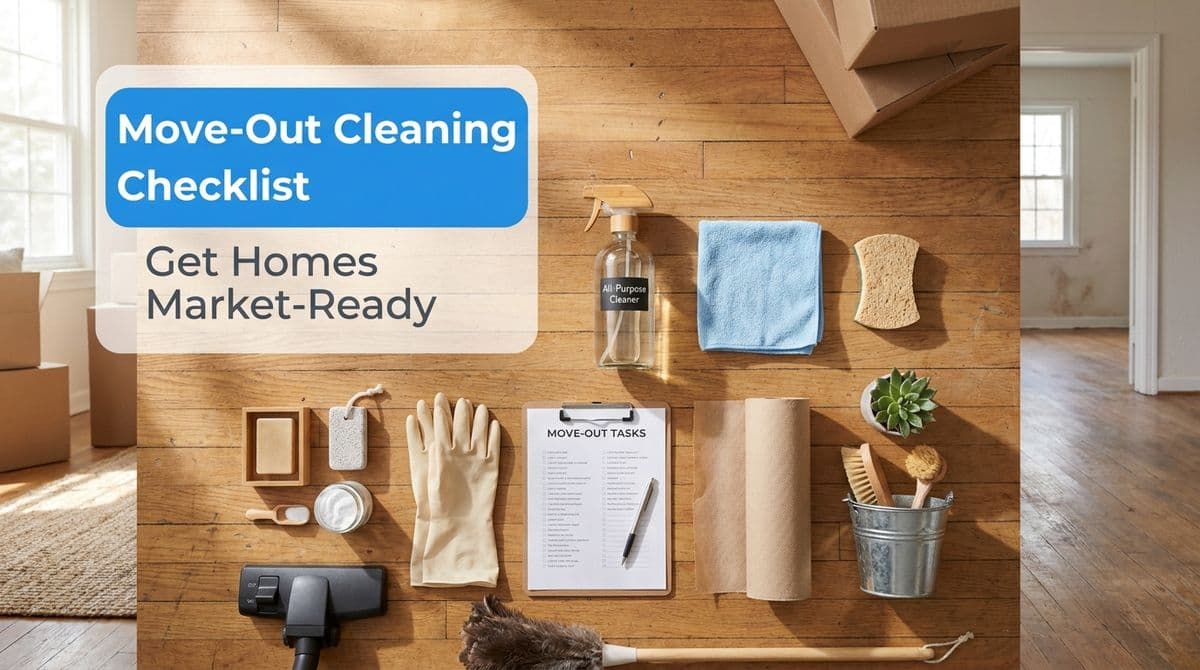
Getting a Home Market-Ready: What We Actually Do on a Move-Out Clean
We recently got a call from a customer — let’s call her Laura — who was getting a rental ready to put on the market. It was a three-bedroom, two-and-a-half-bath, about 1,950 square feet. Her big question was simple: “What does a real move-out cleaning include, how long does it take, and what’s extra?”
Those are the same questions we hear from homeowners and property managers every week. So we thought we’d walk you through exactly what a professional move-in/move-out cleaning looks like when you hire a company like ours, how we price extras like fridge cleaning, and how to time it around listing photos and showings.
What a True Move-In/Move-Out Cleaning Includes
With Laura’s place, we recommended our full move-out package. This is a deeper, top-to-bottom clean designed for empty homes that are being sold or rented — more intensive than regular maintenance cleaning.
Here’s what we typically include in a standard move-in/move-out clean:
- All rooms: Dusting from top to bottom (including light fixtures and reachable vents), wiping doors and switch plates, cleaning baseboards, vacuuming and mopping floors.
- Kitchen: Inside and outside of cabinets and drawers, countertops, backsplash, sink and faucet, outside of appliances, and anything left on walls like grease or splatters.
- Bathrooms: Thorough scrub of tubs, showers, grout where accessible, toilets (including bases), sinks, counters, mirrors, and inside/outside of cabinets and drawers.
- Windowsills & blinds: Dusting blinds, windowsills, and ledges (we typically stay on the inside unless exterior window cleaning is booked separately).
- Light fixtures & fans: Dusting and wiping reachable fixtures and fan blades to remove dust and cobwebs.
With an empty home, we can get into all the little corners that tend to be missed during normal cleanings — inside cabinets, behind doors, and low baseboards that usually hide behind furniture.
What’s Usually Extra: Fridges, Ovens & Special Areas
During our call, Laura asked specifically about the fridge and all the cabinets. For us, inside and outside of cabinets and drawers are included in the move-in/move-out service. Most professional cleaners do the same because buyers and new tenants always open cabinets and drawers during showings.
The inside of the fridge is where many companies charge extra. In our case, we add a flat fee (for Laura it was $50) to fully empty, clean shelves and drawers, and wipe all interior surfaces. The reason it’s separate is simple: fridges can add a lot of time, especially if they’re very dirty or still half-full.
Common add-ons you may see priced separately include:
- Inside of the fridge and freezer
- Inside of the oven (baked-on grease is time-consuming)
- Interior window glass and tracks
- Heavily soiled areas, pet messes, or nicotine residue
If you’re calling around for quotes, be sure to ask: “What’s included in your move-out clean, and what counts as an add-on?” That way you’re comparing apples to apples.
How Long a Move-Out Cleaning Really Takes
Laura also wanted to know how long we’d be in the home. For her 1,950-square-foot property, our estimate was about 4.5 hours for one cleaner, with the option to send a team of two and finish faster.
As a rough guide, here’s what we usually see for empty homes in fair condition:
- 1–2 bedrooms: 3–4 hours
- 3–4 bedrooms: 4–6 hours
- Larger homes (2,500+ sq. ft.): 6+ hours or a full day
The current condition matters. A home that has been professionally cleaned between tenants will go faster than one that hasn’t had a deep clean in years. When we quote a job, we always explain that timing can vary a bit based on how much buildup we find.
Basements, Garages, and Unfinished Spaces
Toward the end of our conversation, Laura asked, “Do you do basements too? It’s unfinished.” That’s a common situation, especially with rental properties.
Most companies (including us) can clean unfinished basements and similar spaces, but the scope is usually lighter: vacuuming or sweeping floors, removing cobwebs, and basic dusting of exposed surfaces. Concrete, exposed framing, or storage-heavy areas take a different approach than finished living spaces, so it’s always worth mentioning these areas when you request your quote.
When to Schedule Cleaning Before Listing or Move-In
Timing can make or break how a home shows. Laura was looking at a specific date in July, and we walked through availability with her so she could coordinate with photos and showings.
Here’s what we suggest for most sales and rentals:
- For listings: Book cleaning after move-out but before professional photos. That way every room looks its best in online listings.
- For rentals: Schedule the clean as close as possible to the new tenant’s move-in date so dust doesn’t have time to accumulate.
- For occupied homes: If you’re still living there while selling, consider a deep clean before photos, then lighter maintenance cleans during the showing period.
We always recommend securing your preferred date early, especially during busy seasons like summer, even if you’re still comparing prices. Just make sure you understand the company’s cancellation or rescheduling policy.
How to Choose the Right Move-Out Cleaning Service
When you’re preparing a home for the market, you’re not just shopping for the lowest number — you’re investing in how that property will present to buyers or renters. As you call around, ask each company:
- What’s included in your move-in/move-out package? (Make sure they cover baseboards, cabinets, drawers, light fixtures, blinds, and windowsills.)
- What are your add-on fees? Specifically ask about the fridge, oven, interior windows, and unfinished spaces.
- How long will the clean take, and how many cleaners will come? This helps you plan access and any same-day appointments like photography.
- Do you offer a satisfaction guarantee? We always do a final walkthrough and, if needed, a free re-clean on missed areas — and we think any professional service should stand behind their work.
With the right plan — and the right team — move-out cleaning doesn’t have to be stressful. When professionals handle the baseboards, fixtures, cabinets, and all those tiny details, your home is truly market-ready the moment you unlock the door.